EN
EN

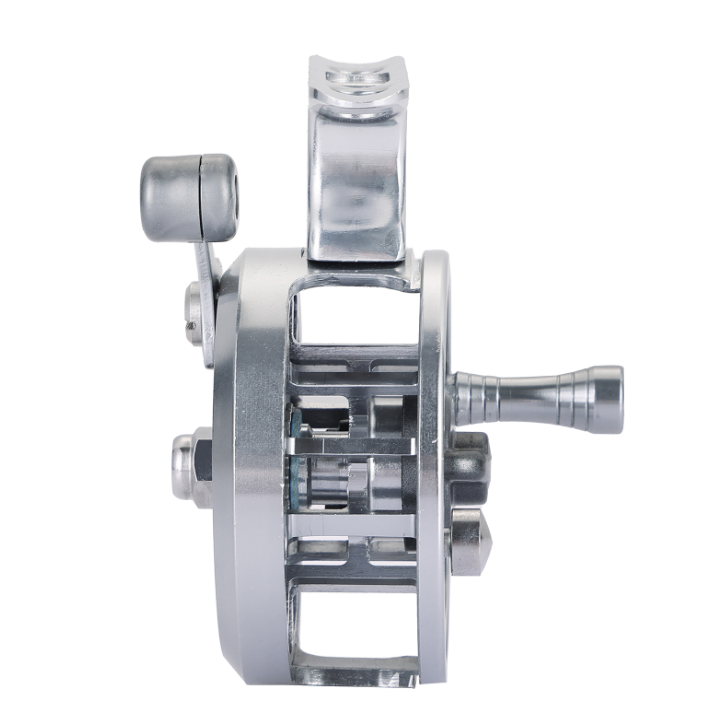
The Cold-Weather Physics: How Thermal Contraction and Lubricant Failure Undermine High-Bearing Ice Fishing Reels
Why More Bearings Increase Freeze-Up Risk in Sub-Zero Conditions
The number of bearings in an ice fishing reel directly influences its vulnerability to cold. Each bearing introduces another internal point where lubricant can thicken and seize—especially below 0°F. As temperatures drop, conventional greases approach their pour point and transition from fluid lubricant to a semi-solid barrier. In a reel with eight or more bearings, even minor resistance at each point compounds into severe drag, resulting in a stiff, energy-wasting retrieve and diminished sensitivity. At −20°F, many warm-weather reels freeze solid within minutes. By contrast, minimalist designs with two to three sealed cartridge bearings eliminate this friction chain reaction entirely—reducing failure points while preserving smooth operation.
| Bearing Count | Freeze-Up Risk at -20°F | Typical Retrieve Resistance | Best Use Case |
|---|---|---|---|
| 2–3 | Low | Minimal | Extreme cold / hardwater |
| 5–6 | Moderate | Noticeable | Mixed seasonal use |
| 8+ | High | Severe | Open-water / warm weather |
Lubricant Solidification Thresholds and Their Real-World Impact on Ice Fishing Reel Function
Lubricants used in standard fishing reels begin to fail well above the temperatures ice anglers routinely face. Most factory-installed lithium-based greases have pour points near 0°F—meaning they become paste-like just below freezing. At −10°F, such grease loses nearly all fluidity, increasing torque demand and starving gear surfaces of protection. Without flowing lubricant, metal-on-metal contact accelerates wear and raises seizure risk. Synthetic greases formulated with polyalphaolefin (PAO) base oils remain fluid down to −40°F and beyond, maintaining film strength and reducing cold-start resistance. For sub-zero reliability, choosing the right lubricant isn’t optional—it’s foundational. And because fewer bearings require less lubricant volume, switching to high-grade synthetic is both simpler and more effective in minimalist reels.
Material Limits: Stainless Steel Bearings, Metal Embrittlement, and Grease Performance in Extreme Cold
When Precision Fails: Bearing Tolerance Shifts Below −25°F (−32°C)
Standard stainless steel bearings undergo ductile-to-brittle transition below −25°F (−32°C), losing shock absorption capacity and increasing susceptibility to cracking under load. Simultaneously, thermal contraction shrinks bearing races and balls—altering the precise clearances engineered at room temperature. This mismatch increases friction, causes uneven rotation, and can lead to seizure. Every additional bearing multiplies these thermally induced tolerance shifts. That’s why reels built for extreme cold favor fewer, larger, sealed bearings: they reduce the total number of precision interfaces vulnerable to thermal stress—and deliver more consistent performance where it matters most.
Synthetic vs. Lithium Greases — Which Actually Stay Fluid on the Ice?
Grease performance is the second critical limit. Lithium-based greases—common in budget and general-purpose reels—typically solidify between 0°F and −10°F as their thickener crystallizes and oil separation occurs. Below that range, drag spikes and protective film integrity collapses. Synthetic greases using PAO or ester base oils retain fluidity and shear stability down to −40°F and lower. In field testing, reels pre-lubricated with synthetics maintain smooth drag and handle rotation after prolonged exposure to −30°F, while lithium-packed models stiffen noticeably within twenty minutes. Anglers should verify grease type before purchase—not just bearing count—since fewer bearings paired with appropriate synthetic lubrication offer superior cold-weather resilience.
Proven Cold-Optimized Design: Sealed Cartridge Bearings and Minimalist Ice Fishing Reel Architecture
Field-Validated Simplicity: Clam QuickSet Pro and Other Arctic-Tested Ice Fishing Reels
In extreme cold, every extra ball bearing becomes a potential failure point. That’s why the most dependable ice fishing reels for sub-zero sessions rely on deliberately minimalist architecture—fewer bearings, each housed in a sealed cartridge that blocks moisture and ice crystal intrusion. The Clam QuickSet Pro exemplifies this philosophy: it uses a single, high-precision sealed bearing at the drive shaft and omits the multi-bearing configuration common in open-water reels. Independent field tests confirm such designs maintain smooth drag and reliable retrieval after hours at −30°F (−34°C), while high-bearing competitors stiffen within twenty minutes. The trade-off is negligible line-retrieval friction for a decisive gain in freeze-proof reliability—proving that simplicity, not bearing count, defines true cold-weather performance.
What Anglers Should Look For: Practical Buying Criteria for Reliable Ice Fishing Reels in Extreme Cold
Selecting the right ice fishing reel for sub-zero conditions means prioritizing engineering over marketing. Avoid reels that emphasize high ball-bearing counts—each added bearing introduces another potential freeze point where lubricant failure or thermal misalignment can occur. Instead, seek models with sealed cartridge bearings or bushings explicitly rated for operation below −25°F (−32°C). Verify whether the manufacturer discloses cold-temperature viscosity data for their lubricants; synthetics like PAO-based greases consistently outperform lithium variants in arctic conditions. Field-tested evidence shows reels with low-drag settings (≤5 lbs) significantly reduce line stress when fighting fish through ice holes—critical for preventing brittle fracture in monofilament at −15°F (−26°C). Budget at least $40–$100 to ensure metallurgical integrity: cheaper reels often use unalloyed steels prone to embrittlement. Prioritize simplicity—single-bearing inline reels with exposed spools allow for quick manual de-icing when frost accumulates, offering a tangible advantage over complex baitcasting designs during extended cold exposure.
Table of Contents
- The Cold-Weather Physics: How Thermal Contraction and Lubricant Failure Undermine High-Bearing Ice Fishing Reels
- Material Limits: Stainless Steel Bearings, Metal Embrittlement, and Grease Performance in Extreme Cold
- Proven Cold-Optimized Design: Sealed Cartridge Bearings and Minimalist Ice Fishing Reel Architecture
- What Anglers Should Look For: Practical Buying Criteria for Reliable Ice Fishing Reels in Extreme Cold