EN
EN

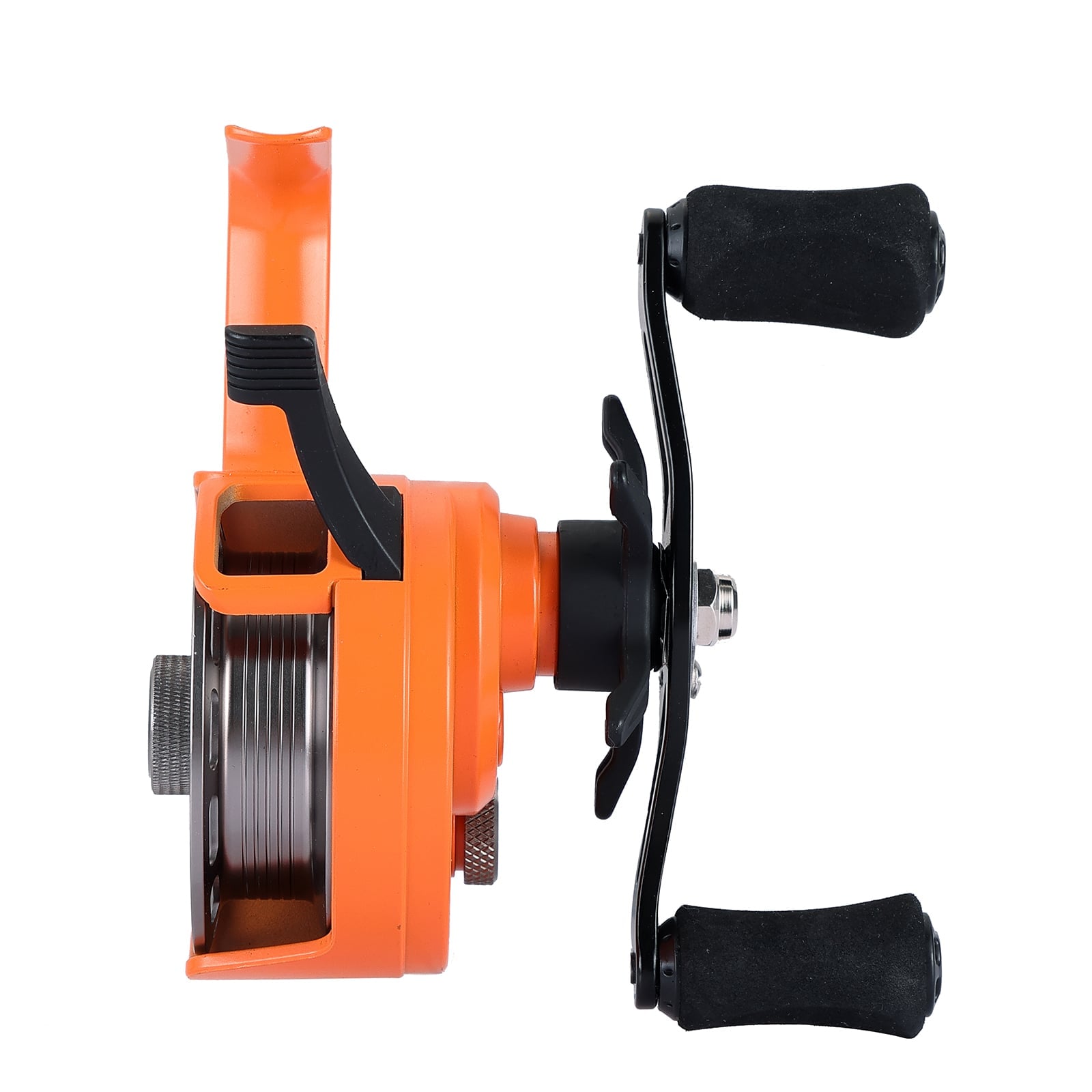
The Carp Fisher's Dilemma—Why a Standard Reel Falls Short
Carp fishing isn't bass fishing with bigger bait. It's a completely different game that places unique demands on tackle—demands that standard spinning reels simply aren't built to handle. The difference isn't about brand or price point; it's about fundamental design choices that reflect how carp behave, how they're targeted, and what it takes to land them consistently. A standard reel will catch carp. A dedicated carp reel will catch them more often, with less drama, and without leaving the angler wishing they'd brought something else.
The Free-Spool Feature That Changes Everything
The most obvious differentiator is the free-spool or baitrunner mechanism. Standard spinning reels have a single drag system that engages as soon as the handle is turned. A dedicated carp reel, on the other hand, typically features a secondary drag system that allows the spool to spin freely with minimal resistance while the main drag remains set for the fight.
Here's why that matters: Carp are notorious for picking up bait and running with it before the angler even realizes there's been a take. With a standard reel, the fish feels immediate resistance, drops the bait, and swims off—often without the hook ever setting. With a free-spool system, the carp can take line without feeling pressure, giving the angler those critical seconds to pick up the rod, engage the main drag, and set the hook properly. That's the difference between a take and a landed fish.
Line Capacity—Because Carp Don't Fight Fair
Standard reels are designed around versatility, with line capacities that work for a range of species. Dedicated carp reels are built around one priority: holding enough line to handle long, powerful runs. A typical carp reel might hold 300 to 500 meters of 0.35mm monofilament. That's not overkill—it's insurance.
Carp aren't sprinters; they're marathon runners that can peel off 100 yards of line in seconds and keep going. Running out of line on a standard reel means either chasing the fish with the boat—not always an option—or watching the spool empty and the line snap. The extra capacity buys time and options, two things that matter when a double-figure fish decides to head for the next county.
Gearing and Retrieve—Built for Power, Not Speed
Standard spinning reels often feature higher gear ratios in the 5.5:1 to 6.2:1 range, prioritizing fast line pickup for techniques like casting and retrieving lures. Dedicated carp reels typically run lower ratios, around 4.5:1 to 5.3:1. The trade-off is deliberate: lower gearing provides more torque, making it easier to winch in heavy fish against stubborn resistance.
| Feature | Standard Spinning Reel | Dedicated Carp Reel |
|---|---|---|
| Gear Ratio | 5.5:1 – 6.2:1 | 4.5:1 – 5.3:1 |
| Line Capacity | Moderate | High (300-500m+) |
| Drag Systems | Single | Dual (Free-spool + Main) |
| Spool Design | Standard | Large-diameter, slow oscillation |
| Typical Bearings | 4-6 | 6-8+ |
The retrieve rate on a dedicated carp reel still gets the job done—often 100 to 115 centimeters per crank—but the emphasis is on raw cranking power. When a twenty-pound carp is bulldogging near the bank, that extra torque makes all the difference.
Spool Design and Line Lay—Distance Matters
Carp fishing often requires casting heavy bait rigs long distances, sometimes 100 yards or more. The spool design on a dedicated carp reel reflects this reality. Larger diameter spools with slower oscillation patterns lay line more evenly, reducing friction during the cast and allowing the line to peel off cleanly. Standard reels, with their faster oscillation and smaller spools, can create uneven line lay that catches on itself during a long cast, costing distance and increasing the risk of tangles.
Some dedicated carp reels also feature tapered spools that release line with less resistance, adding precious yards to every cast. For the carp angler fishing from the bank, those extra yards can mean the difference between presenting bait in the strike zone or watching fish feed just out of range.
Build Quality and Corrosion Resistance—The Long-Haul Factor
Carp fishing isn't a fair-weather pursuit. Sessions often run overnight or for multiple days, with reels exposed to dew, rain, and the general dampness that comes with spending time near water. Dedicated carp reels are built with this in mind, featuring sealed drag housings, corrosion-resistant materials, and finishes that hold up to prolonged exposure.
Standard reels may use similar materials on paper, but the execution differs. Components like main shafts, bearings, and drag washers in dedicated carp reels are often spec'd to higher standards—stainless steel where standard reels might use plated brass, carbon drag washers where standard reels use felt. The result is a reel that stays smooth and functional through long sessions, not just the first few hours.
The Practical Test—A French Commercial Fishery Case
A commercial carp fishery in northern France ran an informal comparison over a full season. Half their anglers used standard spinning reels; the other half used dedicated carp reels with free-spool systems and larger line capacities. The results weren't subtle. The dedicated carp reels accounted for roughly 40% more landed fish over the season, with the biggest gap showing up in rainy conditions where standard reels started showing drag inconsistency and line management issues. The takeaway wasn't that standard reels don't work—they do. But dedicated carp reels work more consistently across the range of conditions carp anglers actually face.
When a Standard Reel Might Still Make Sense
To be fair, a standard reel isn't always the wrong choice. For short sessions, small water, or fishing situations where long casts and big runs aren't expected, a standard spinning reel can handle carp just fine. The extra weight and complexity of a dedicated carp reel aren't always necessary. But for serious carp fishing—the kind where sessions stretch into days and fish over twenty pounds are the goal—the dedicated reel justifies its place in the rod bag every time.
For anglers and buyers looking at the broader picture, working with manufacturers that understand these distinctions matters. Companies like Vigorcent, through their WILDWOLF manufacturing operations, have spent over twenty years refining carp-specific reel designs, incorporating features like slow oscillation systems, corrosion-resistant internals, and precision gear sets that deliver where it counts—on the bank, in the rain, with a big fish on the line.
Table of Contents
- The Carp Fisher's Dilemma—Why a Standard Reel Falls Short
- The Free-Spool Feature That Changes Everything
- Line Capacity—Because Carp Don't Fight Fair
- Gearing and Retrieve—Built for Power, Not Speed
- Spool Design and Line Lay—Distance Matters
- Build Quality and Corrosion Resistance—The Long-Haul Factor
- The Practical Test—A French Commercial Fishery Case
- When a Standard Reel Might Still Make Sense