EN
EN

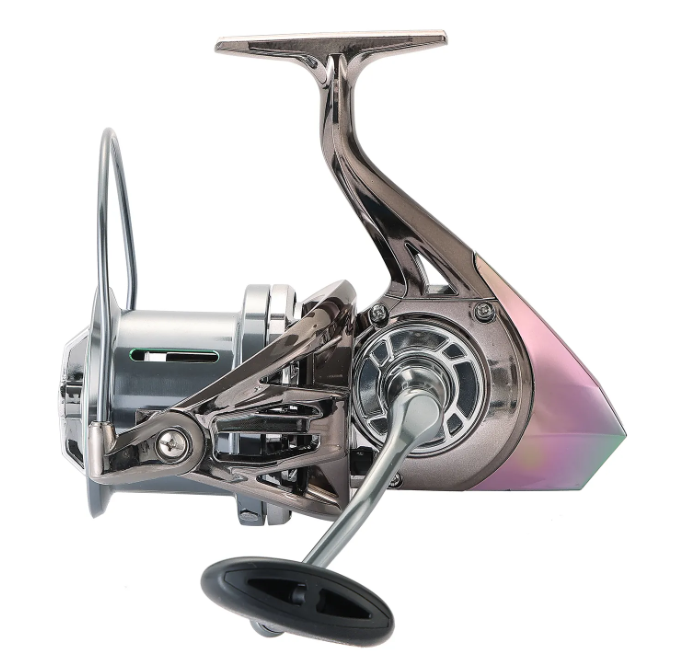
Beyond the Price Tag
Walk into any big-box outdoor store and the spinning reel aisle stretches forever. Rows of boxes in every color imaginable, price points from twenty bucks to four hundred, and spec sheets that read like a foreign language. For the angler trying to separate the genuine performers from the shelf fillers, the noise can be overwhelming.
But here’s the thing: high-performance spinning reels share a set of core features that separate them from the rest. These aren’t marketing buzzwords—they’re engineering choices that show up on the water in very real ways. Knowing what to look for turns a confusing purchase into a confident one.
The Frame and Body: Where Durability Starts
The foundation of any spinning reel is its frame. And in the world of performance reels, two materials dominate: graphite and aluminum. Graphite bodies have come a long way in recent years. Modern high-grade graphite composites offer a remarkable strength-to-weight ratio, shedding ounces without sacrificing rigidity. This matters on long days of casting—every ounce saved reduces fatigue.
But graphite isn’t always the answer. For saltwater applications or situations where the reel will take a beating, aluminum frames provide superior durability and resistance to flex under heavy load. The trade-off is weight. An aluminum frame reel will almost always be heavier than its graphite counterpart.
Some manufacturers have found a middle ground: graphite bodies with aluminum rotor assemblies, or aluminum frames with graphite side plates. These hybrid approaches aim to put material where it matters most—rigidity in the frame, weight savings where stress is lower.
What separates a good frame from a great one isn’t just the material, though. It’s the engineering that goes into the connection points—where the foot meets the rod, where the rotor attaches, where the gear train sits. A poorly designed frame, even with premium materials, will flex under load. That flex translates to lost energy, reduced drag smoothness, and premature wear.
The Spool: CNC Machining Makes the Difference
Here’s a feature that gets overlooked by many anglers but makes a massive difference: the spool. Specifically, how it’s manufactured. CNC-machined aluminum spools have become a hallmark of quality spinning reels.
CNC machining—computer numerical control—produces spools with tolerances that casting simply cannot match. The result is a spool that runs perfectly true, with consistent line lay across the entire surface. This matters for casting distance, for line management, and for reducing friction during the retrieve.
A braid-ready spool is another feature worth looking for. These spools feature a textured surface or a rubber gasket that prevents braided line from slipping under pressure. Without this feature, anglers often have to back the braid with a layer of monofilament or tape—an extra step that’s easy to forget until a big fish strips line and the braid spins freely on the spool.
The spool lip design also affects performance. A tapered lip allows line to leave the spool with less resistance, increasing casting distance. Some high-end reels feature specially shaped lips that reduce wind knots—a common frustration with braided lines.
Bearings: More Isn't Always Better
Walk through the reel aisle and count how many boxes boast about bearing counts. 8+1. 10+1. 13+1. It’s easy to assume more bearings mean a better reel. But that’s not quite how it works.
What matters isn’t the number of bearings—it’s where they’re placed and what kind they are. A reel with six strategically placed, high-quality stainless steel bearings will outperform a reel with twelve cheap bearings stuffed into every possible location. The critical positions are the main shaft, the pinion gear, and the line roller. These are the points that see the most stress and the most rotation.
Shielded bearings offer another layer of protection against saltwater and grit. Double-shielded stainless steel bearings perform reliably in harsh conditions. Unshielded bearings might feel smoother initially, but they degrade faster when exposed to the elements.
The “+1” in bearing counts typically refers to the anti-reverse bearing—a one-way roller bearing that prevents the handle from spinning backward. A quality anti-reverse bearing is non-negotiable for hook-setting power.
The Drag System: Smoothness Under Pressure
Any reel can stop a fish if the drag is cranked down tight enough. The difference between a performance reel and an average one is how smoothly that drag performs under pressure. A jerky drag—one that stutters and surges—is a recipe for pulled hooks and broken lines.
High-performance spinning reels feature drag systems with multiple carbon fiber or felt washers. The material matters, but the design matters more. A well-designed drag stack applies pressure evenly across the surface of the washers, creating consistent resistance from the first run to the last.
Carbon fiber drag washers have become the standard in quality reels. They run smoother than felt, dissipate heat better, and maintain consistent performance even when wet. Some manufacturers use proprietary materials that push the boundaries even further.
The drag knob itself deserves attention. It should offer precise, incremental adjustments—not vague clicks that jump from too loose to too tight. A knurled knob that’s easy to grip with wet hands is a small detail that makes a big difference when fighting a fish.
A Note on Rotor Balance and Oscillation
Two features that rarely make it onto spec sheets but dramatically affect performance: rotor balance and oscillation system.
The rotor—the part that spins around the spool—needs to be perfectly balanced. An unbalanced rotor creates vibration during the retrieve, which translates to fatigue over a long day and can actually affect the sensitivity felt through the rod. Quality manufacturers balance rotors during assembly, often using computer-aided analysis to identify and correct imbalances.
The oscillation system controls how the spool moves up and down during the retrieve, laying line evenly across the spool. A slow oscillation system—sometimes called a “slow oscillation” or “infinite anti-reverse” design—lays line in tighter, more uniform layers. This reduces line twist and improves casting distance. Fast oscillation systems lay line in wider, looser patterns that can lead to tangles and reduced performance.
| Feature | What to Look For | Why It Matters |
|---|---|---|
| Frame material | High-grade graphite or machined aluminum | Rigidity without excess weight |
| Spool | CNC-machined, braid-ready | Consistent line lay, no slip |
| Bearings | Shielded stainless steel in key positions | Smooth operation, corrosion resistance |
| Drag | Carbon fiber washers, smooth adjustment | Consistent pressure, no surging |
| Rotor balance | Precision-balanced assembly | Reduced vibration, better feel |
The Engineering Behind the Feel
A story from the manufacturing side illustrates why these features matter. During a production run at a reel factory in southern China, quality control caught a batch of rotors that were out of balance by less than two-tenths of a gram. Most anglers would never notice that difference on a single cast. But over thousands of casts—over a full season of fishing—that tiny imbalance adds up to fatigue and reduced sensitivity. The factory rejected the entire batch and retooled the molding process. That level of attention to detail separates manufacturers who understand performance from those who just push boxes.
Industry standards like the ones developed by the American Fishing Tackle Manufacturers Association provide benchmarks for drag performance and gear durability, though many of the most meaningful quality metrics come from internal testing protocols that manufacturers develop themselves over years of experience.
Putting It All Together
A high-performance spinning reel isn’t defined by any single feature. It’s the sum of well-engineered parts working together—a rigid frame, a precision spool, quality bearings in the right places, a smooth drag, and balanced rotation. Any reel can check one or two of these boxes. The ones that check all of them, consistently, are the reels that perform when it counts.
Companies with deep manufacturing experience, like Vigorcent, build these features into their designs not because they look good on a spec sheet, but because they’ve learned—through decades of production and feedback from anglers—what actually matters on the water.