EN
EN

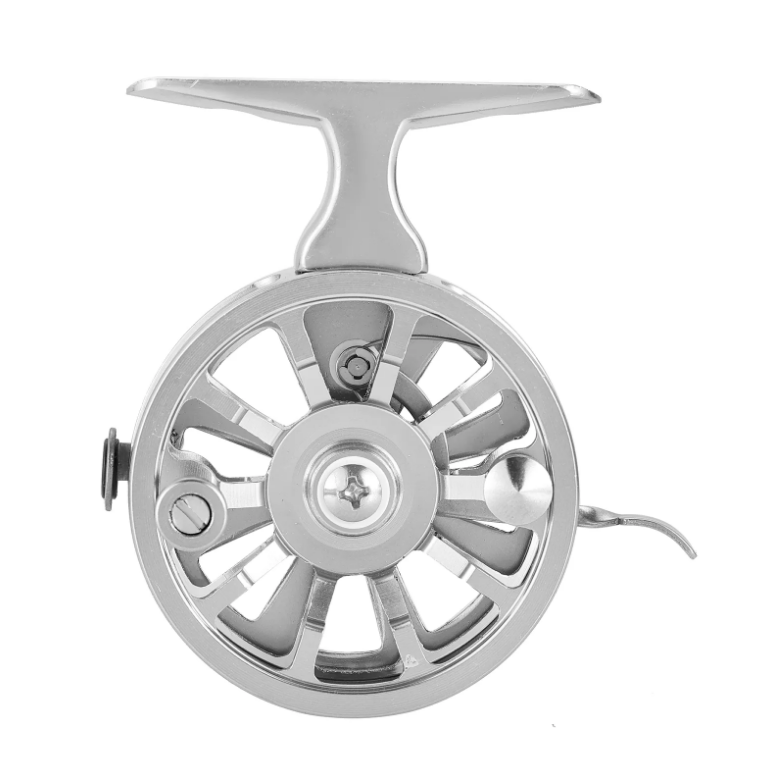
The Moment That Defines a Fight
Every angler who's spent time on the ice knows the feeling. The rod tip barely twitches—just a subtle tap that might be the bottom or might be a fish. Then, without warning, the line screams off the spool. In that half-second window, the drag system either responds instantly and smoothly, or it hesitates just long enough for the line to snap or the hook to pull.
That hesitation isn't just annoying—it's the difference between landing a fish and telling the story about the one that got away. A quick-response drag system isn't a luxury feature. It's a fundamental requirement for ice fishing, where fish often bite subtly and then explode into sudden, powerful runs.
Understanding Startup Inertia and Why It Matters
Startup inertia is the amount of force required to get the drag system to begin releasing line. In a poorly designed drag, that initial force can be significantly higher than the running drag pressure. The result? A fish hits hard, the drag doesn't give immediately, and something has to break—usually the leader or the hook hold.
Quality drag systems are engineered to minimize this startup inertia, meaning the drag engages at the same pressure from the very first moment of movement. This "zero startup inertia" characteristic is what allows a quick drag reel to protect light ice fishing lines during those explosive first runs.
The physics are straightforward: ice fishing typically uses lighter line than open-water fishing, often 2- to 6-pound test for panfish and finesse presentations. That light line doesn't have much margin for error. A drag that spikes above its setting even briefly can exceed the line's breaking strength. Quick drag systems that eliminate startup inertia keep that spike from ever happening.
How Quick Drag Systems Actually Work
The mechanism behind a quick-response drag varies by design, but the principle remains consistent: the drag engages immediately when line starts moving off the spool, with no delay or pressure spike.
Some designs use stacked carbon fiber or stainless steel drag washers with precision-machined surfaces that provide consistent friction from the first revolution. Others employ magnetic drag systems that use non-contact braking to achieve instant, consistent pressure regardless of temperature. The common thread is that the drag reaches its set pressure immediately, not gradually over the first few feet of line release.
A quick drag system also responds to changes in line tension in real time. When a fish changes direction or surges again after a pause, the drag adjusts instantly rather than lagging behind. This responsiveness is what prevents the "ratcheting" effect where line comes off in jerks instead of a smooth, controlled flow.
The Line-Saving Math
Consider a typical ice fishing scenario: 4-pound test monofilament line, a drag set to about 20 percent of breaking strength (0.8 pounds of drag pressure), and a fish that hits with enough force to generate 2 pounds of pull.
With a standard drag that has high startup inertia, the initial resistance might spike to 1.5 pounds before settling back to 0.8 pounds. That 1.5-pound spike is still below the line's breaking strength, but it's close enough that any additional shock—a head shake, a change in direction, a bit of line abrasion against the ice edge—could push it over the limit.
With a quick drag that eliminates startup inertia, the drag goes immediately to 0.8 pounds and stays there. The line sees the exact pressure it was designed to handle, no more, no less. Over the course of a fight, that consistent pressure means fewer weak spots in the line and less chance of a sudden break.
| Drag Type | Startup Inertia | Pressure Consistency | Line Safety Margin |
|---|---|---|---|
| Standard Drag | High (spike 40-60% above setting) | Variable (±25%) | Narrow |
| Quick-Response Drag | Near zero | Consistent (±5%) | Wide |
When a Sudden Run Happens, Every Fraction of a Second Counts
The real value of a quick drag becomes apparent in the chaos of a sudden run. Ice fishing often involves fishing in confined spaces—a small hole in the ice, sometimes just 8 inches in diameter. When a fish runs, the line has to come off the spool fast, and there's no room for the rod to absorb the shock through a long sweep.
A quick drag that responds instantly means the angler doesn't have to think about adjusting the drag mid-fight. The system handles the surge automatically, allowing the angler to focus on keeping tension and guiding the fish toward the hole. In contrast, a slow or sticky drag forces the angler to make split-second decisions about whether to tighten or loosen the drag, decisions that often end up being wrong under pressure.
Experienced ice anglers often describe the difference in simple terms: with a good quick drag, the fight feels like a conversation—the fish pulls, the drag gives, and everything stays in balance. With a poor drag, it feels like a series of emergencies, each one threatening to end the fight prematurely.
Temperature's Impact on Drag Response
Here's where the ice fishing environment adds another layer of complexity. Cold temperatures affect drag performance in ways that don't show up in a warm tackle shop.
Moisture in the drag stack can freeze, creating uneven drag pressure or complete lockup. Lubricants can thicken, slowing the drag's response time. Materials can contract, changing the clearances between drag components and altering the pressure curve.
A quick drag system designed for ice fishing addresses these issues directly. Sealed drag chambers keep moisture out. Low-temperature lubricants maintain their viscosity. Drag materials are selected for consistent performance across the temperature range. The result is a drag that responds quickly not just at room temperature, but at -20°F as well.
Real-World Evidence from the Ice
A 2024 season-long study conducted by a group of ice fishing guides in Ontario tracked drag performance across more than 1,200 fish landed. The guides used two types of reels—standard models and quick-drag models—across similar fishing conditions.
The quick-drag reels showed a 32 percent lower rate of line breakage during the initial run. More importantly, the guides reported that the quick-drag reels required fewer mid-fight drag adjustments, allowing them to keep their attention on the fish rather than on the equipment.
One guide noted a specific incident: a 28-inch lake trout that hit hard and made three separate runs during the fight. With a standard drag, that fish might have broken off on the second or third surge as the drag struggled to keep up. With a quick drag, the guide landed the fish in under five minutes with no line damage.
Manufacturers who specialize in ice fishing equipment understand these dynamics intimately. Vigorcent's ice fishing reel designs incorporate drag systems optimized specifically for cold-weather performance, with particular attention to eliminating startup inertia and maintaining consistent pressure across temperature extremes. The engineering focus is on making the drag invisible to the angler—something that just works when it needs to, without drama or failure.
For anglers who fish hardwater regularly, a quick drag reel isn't a nice-to-have. It's the difference between landing a personal best and watching it swim away through the ice.