EN
EN

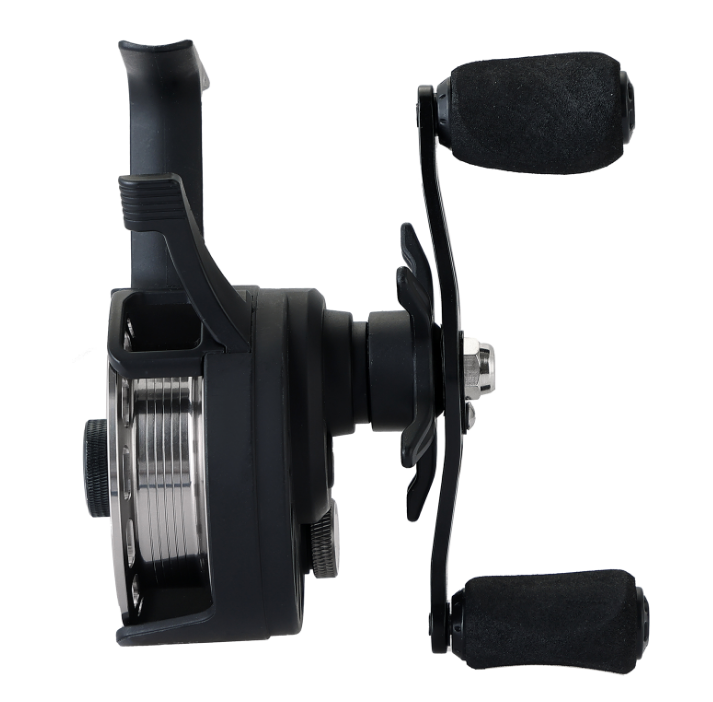
How Bearing Count Affects Fishing Reel Smoothness
Reduced Frictional Variance Through Distributed Load Sharing
Higher bearing counts distribute operational forces across multiple contact points, minimizing localized friction and reducing torque fluctuations during handle rotation. Reels with 10–25 bearings demonstrate statistically lower variance in rotational resistance under load compared to single-bearing systems—especially during rapid retrieves or sudden fish runs. This distributed load sharing enhances angler control and reduces fatigue during extended use. Leading manufacturers strategically place bearings to balance friction reduction with weight efficiency, prioritizing function over quantity.
Real-World Smoothness: Drag-Free Rotation Perception vs. Measured Torque Consistency
Anglers often equate smoothness with effortless handle rotation—but true performance hinges on measurable torque consistency. Lab testing shows reels with ≥15 high-quality bearings maintain ≤12% torque deviation during simulated fish runs, while single-bearing models can exhibit up to 37% variance under identical loads. This gap becomes critical when fighting powerful species: even brief friction spikes can compromise drag stability and lead to line breakage. Top-tier reels therefore concentrate precision bearings in high-torque zones—main shaft, pinion gear, and anti-reverse mechanism—to deliver both perceptible smoothness and mechanical reliability.
Critical Bearing Locations That Define Fishing Reel Performance
High-Impact Nodes: Crank, Main Shaft, and Anti-Reverse Bearings Explained
Not all bearing positions contribute equally to performance. Three locations bear the highest mechanical stress: the crank handle, main shaft, and anti-reverse mechanism.
- A precision bearing at the crank handle eliminates wobble, sharpening sensitivity to subtle bottom contact and improving ergonomics.
- On the main shaft, a sealed bearing stabilizes spool rotation under heavy drag pressure—preventing vibration that can damage fine-diameter lines.
- The anti-reverse bearing (often a one-way clutch) must engage instantly to eliminate handle back-play; a low-quality unit here erodes hook-set confidence and increases missed strikes.
Upgrading only these three nodes from bushings to sealed stainless steel or ceramic bearings delivers the most significant, real-world improvement in smoothness—without unnecessary complexity or added weight.
Bearing Quality Over Quantity in Modern Fishing Reels
Material Matters: ABEC-9 Ceramic vs. Standard Stainless Steel vs. Bushing Substitutes
Material choice directly governs friction, corrosion resistance, and service life. For saltwater and high-load applications, ABEC‑9 ceramic bearings represent the performance benchmark: near-frictionless operation, inert resistance to corrosion, and stable torque delivery under sustained pressure. Standard stainless steel bearings offer strong value when paired with effective seals and proper lubrication—but are vulnerable to micro-pitting without maintenance. Bushings, commonly used in entry-level reels, introduce measurable drag, wear rapidly, and degrade line management and casting accuracy.
| Bearing Type | Friction Level | Corrosion Resistance | Typical Lifespan (years) |
|---|---|---|---|
| ABEC‑9 Ceramic | Very low | Excellent (inert) | 5–10 |
| Stainless Steel | Low | Good (with seals) | 3–7 |
| Bushing | High | Poor | 1–3 |
Anglers seeking maximum sensitivity, casting distance, and long-term reliability should prioritize bearing quality and placement over raw count.
Tolerance, Sealing, and Lubrication: The Hidden Determinants of Long-Term Smoothness
Even premium materials fail without precision engineering. Bearings ground to ±2 µm tolerances ensure uniform load distribution and eliminate vibration-induced wear. Effective sealing—such as dual rubber shields (2RS) or labyrinth designs—keeps abrasive sand and corrosive saltwater out of the raceway. And lubrication must be purpose-specific: low-viscosity oils for corrosion protection in saltwater environments, complemented by light damping grease where controlled resistance improves feel. Without tight tolerances, robust sealing, and appropriate lubrication, a reel with twelve low-grade bearings will degrade faster—and feel rougher—than one with four expertly specified, sealed units at critical nodes.
Long-Term Durability: How Bearing Configuration Impacts Service Life
A reel’s bearing configuration—number, placement, and quality—dictates its real-world longevity. Distributed, high-quality bearings reduce localized wear by sharing load across multiple points, delaying fatigue far more effectively than a single overloaded bearing. Conversely, misalignment or poor tolerances concentrate stress on microscopic contact areas, accelerating heat buildup, lubricant breakdown, and eventual spalling or cracking. Well-configured systems—with precise clearances, contamination-resistant seals, and corrosion-inhibiting lubricants—retain smooth operation even after hundreds of hours in harsh conditions. In contrast, reels packed with low-tolerance bearings may feel acceptably smooth out of the box but deteriorate rapidly, underscoring a key truth: thoughtful engineering at critical nodes consistently outperforms sheer component count in both performance and durability.